


Problem Statement
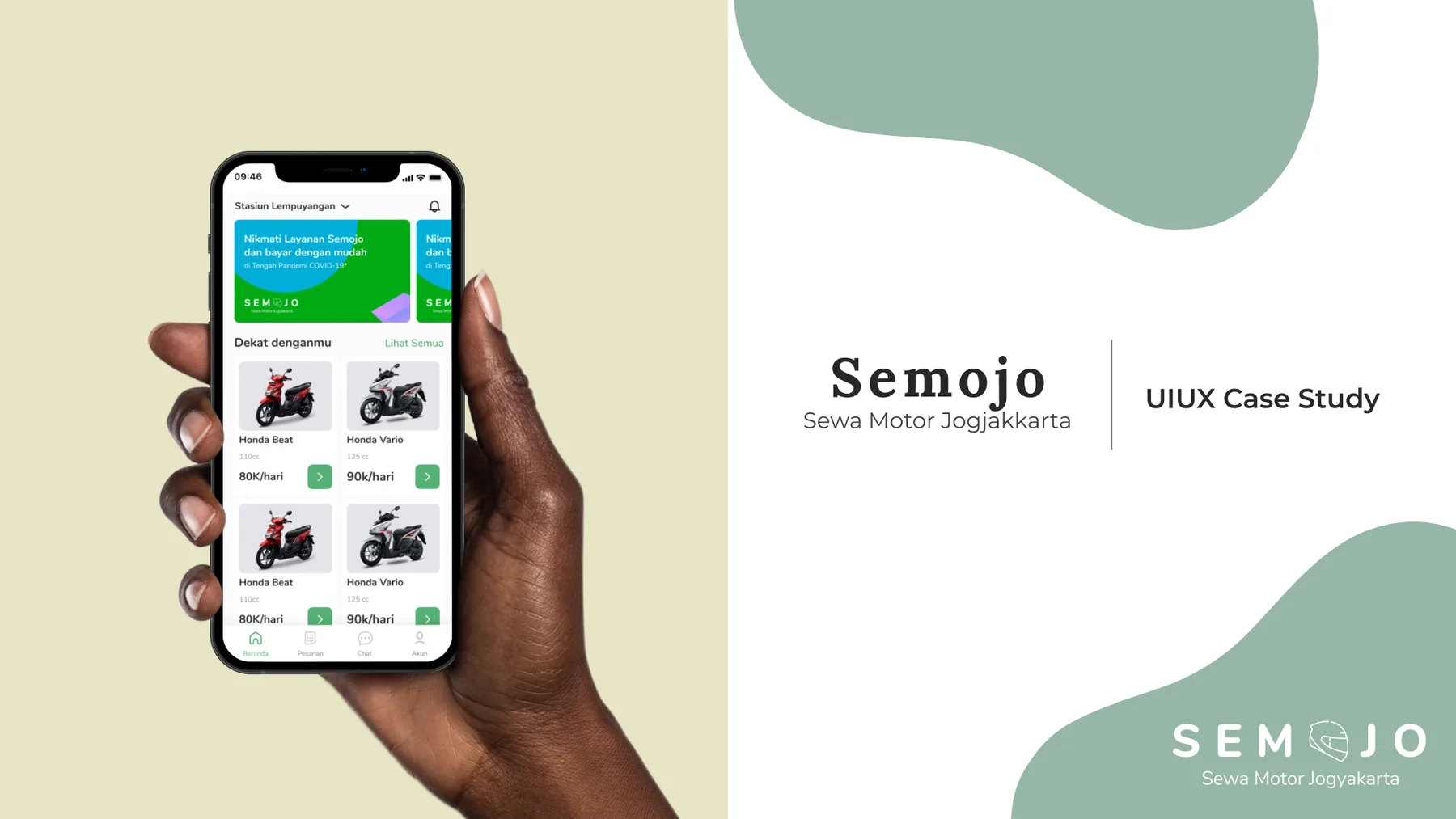
A few months ago I took the train to Yogyakarta. When I arrived, I wanted to rent a motorbike, but it turned out to be surprisingly hard: there weren't enough bikes, I didn't know where to rent one, and the requirements were strict. Semojo aims to make road trips in Yogyakarta easier, so travellers don't have to wait a long time for a bus or spend a lot on taxis, and aren't tied to someone else's schedule — whether they're planning a road trip, an expedition, or just riding around with friends. Today, they first have to take a bus into the city because the rental shops are in the city centre, then pick a vehicle, head back, gather their friends and only then carry on planning the trip. It takes far too much time.
User & Audience
Visitors to Yogyakarta who need their own transport while they're in town.
Scope & Constraints
I designed the motorbike booking experience in Yogyakarta, along with the onboarding and registration flow.
Roles & Responsibilities
This is a personal project: I handled the whole UX and UI design process end to end, including the basic illustrations that support the experience.
Process
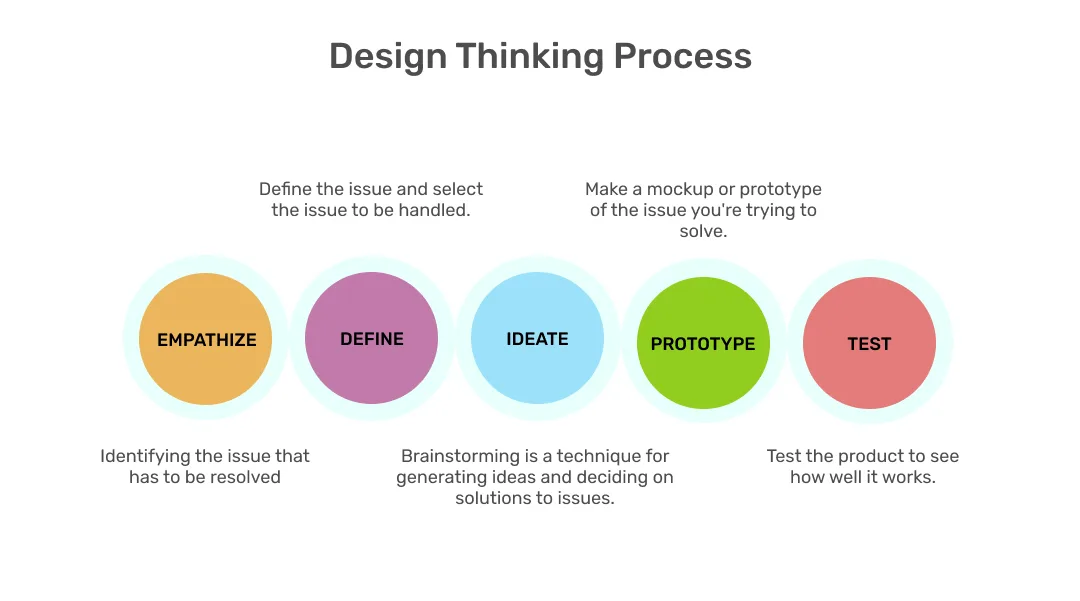
I followed the design thinking framework — empathise, define, ideate, prototype and test — to shape the product.
Make a research plan
I wrote a research plan to keep the project on track and make it easier to decide on the next steps.
Research Plan
| Background | Research objectives | Participant criteria | Research method |
|---|---|---|---|
| Motorbike rental in Yogyakarta helps visitors get around the city on their own. | 1. Understand the pain points of travelling to Yogyakarta and renting a motorbike | People who have visited Yogyakarta and rented a motorbike. | Qualitative (interviews) N = 5 |
| 2. Understand the user's journey when renting a motorbike | |||
| 3. Understand what users expect when renting a motorbike | |||
| 4. Design a solution to the problem |
Research questions
The interview questions dig deeper into each research objective. They were asked in Indonesian:
Interview questions
- Apa saja yang perlu kamu siapkan ketika berlibur?
- Bagaimana kamu mengatur keuangan untuk berlibur?
- Apa ekspektasimu ketika pergi ke Yogyakarta?
- Kenapa memilih sewa motor sebagai transportasi?
- Pernahkah kamu mencoba transportasi lain setelah sampai di Yogyakarta?
- Dari mana kamu tahu bahwa di Yogyakarta ada penyewaan motor?
- Apa yang biasanya kamu lakukan ketika penyewaan motor sedang penuh?
- Masalah apa yang biasanya kamu hadapi ketika mencari penyewaan motor?
- Ceritakan bagaimana kamu mendapatkan penyewaan motor di Yogyakarta.
- Apa harapanmu terkait masalah yang kamu alami ketika berlibur ke Yogyakarta?
Identify the user
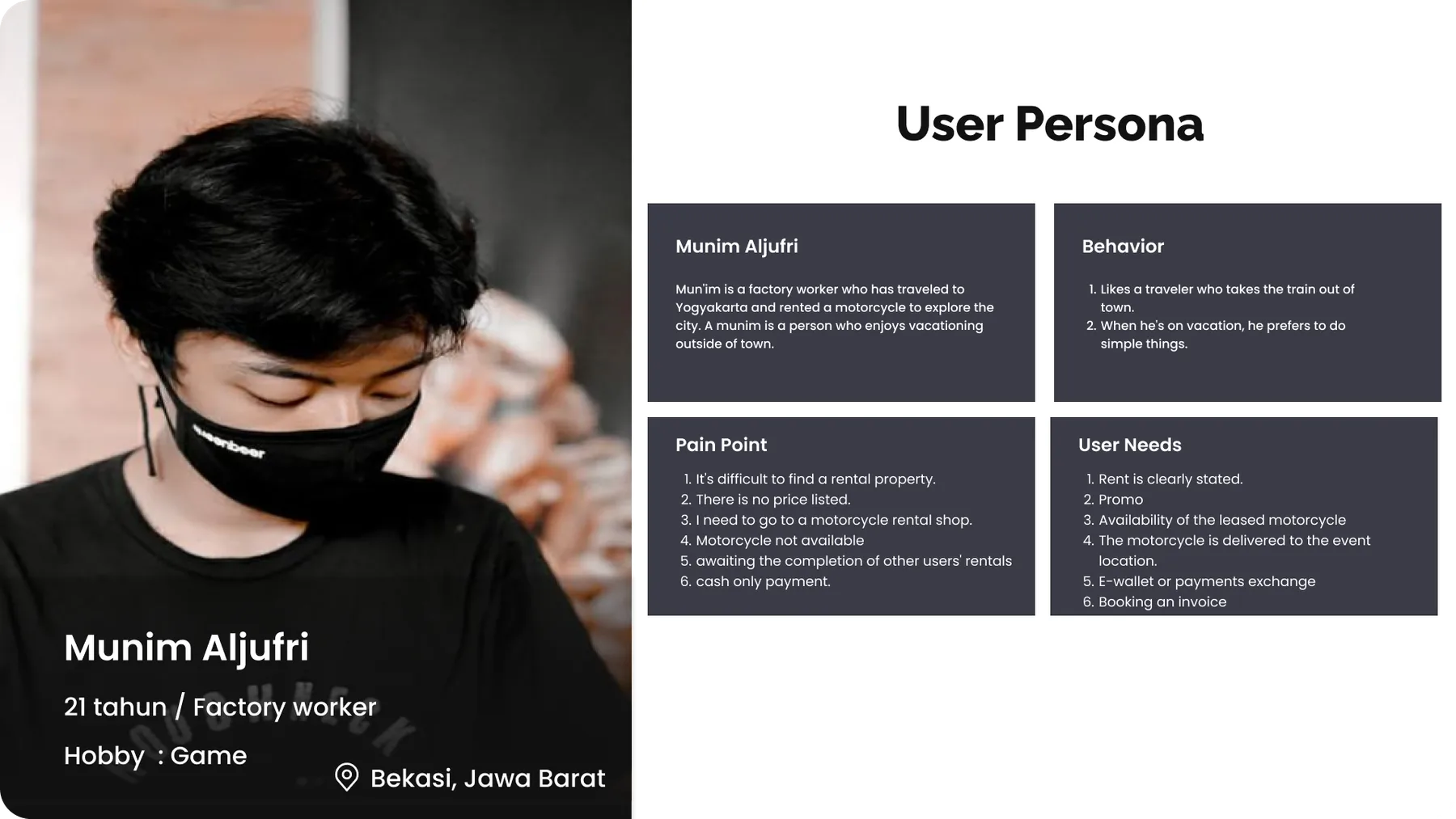
Following the research plan, I interviewed five people to understand the users better — all of them travellers who had visited Yogyakarta and rented a motorbike. I summarised the interviews and turned them into a user persona.
User persona
Define the user needs
To understand what users really need, I analysed the interviews to find the real problem and map their journey to Yogyakarta and through renting a motorbike. I used an affinity diagram to find the sources of frustration; once those were clear, I could plan a solution for each pain point.
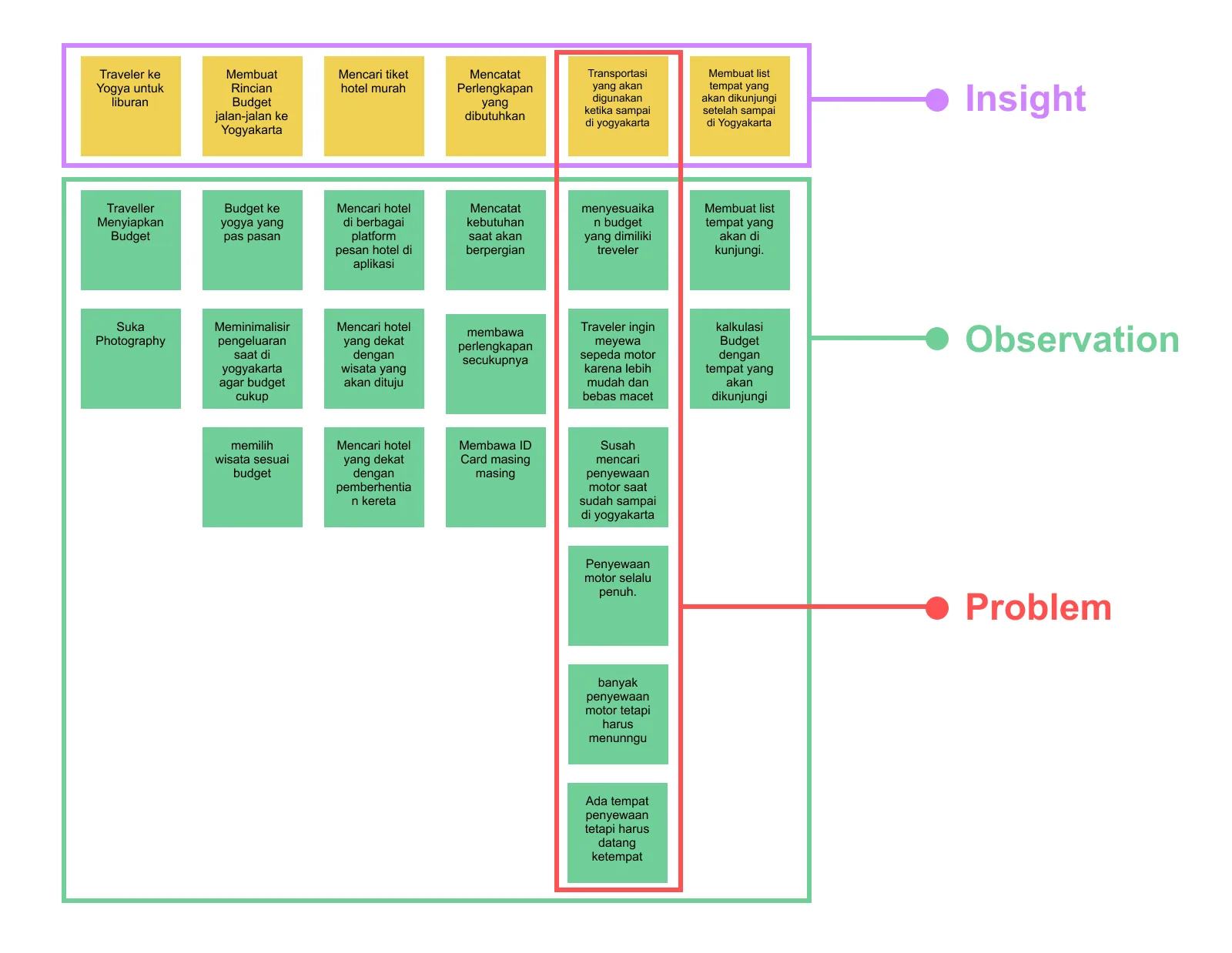
The affinity diagram surfaced many insights, including technical issues the product can't fix. I focused only on the problems the product can actually solve.
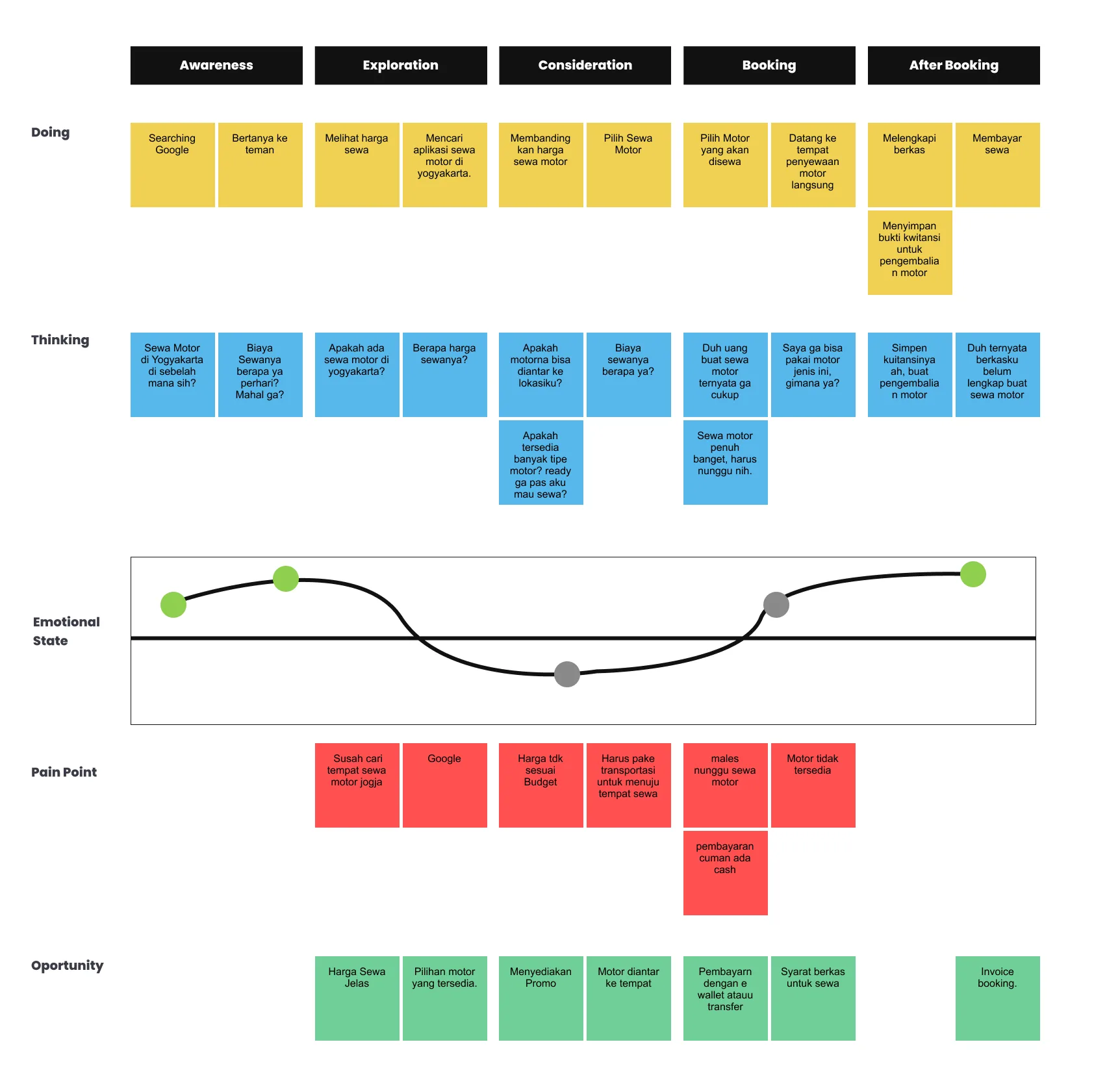
A customer journey map visualises the steps people take to reach their goal.
The customer journey map also showed opportunities for the product and helped decide which features to build — each opportunity answers a problem users ran into.
Design process (ideate)
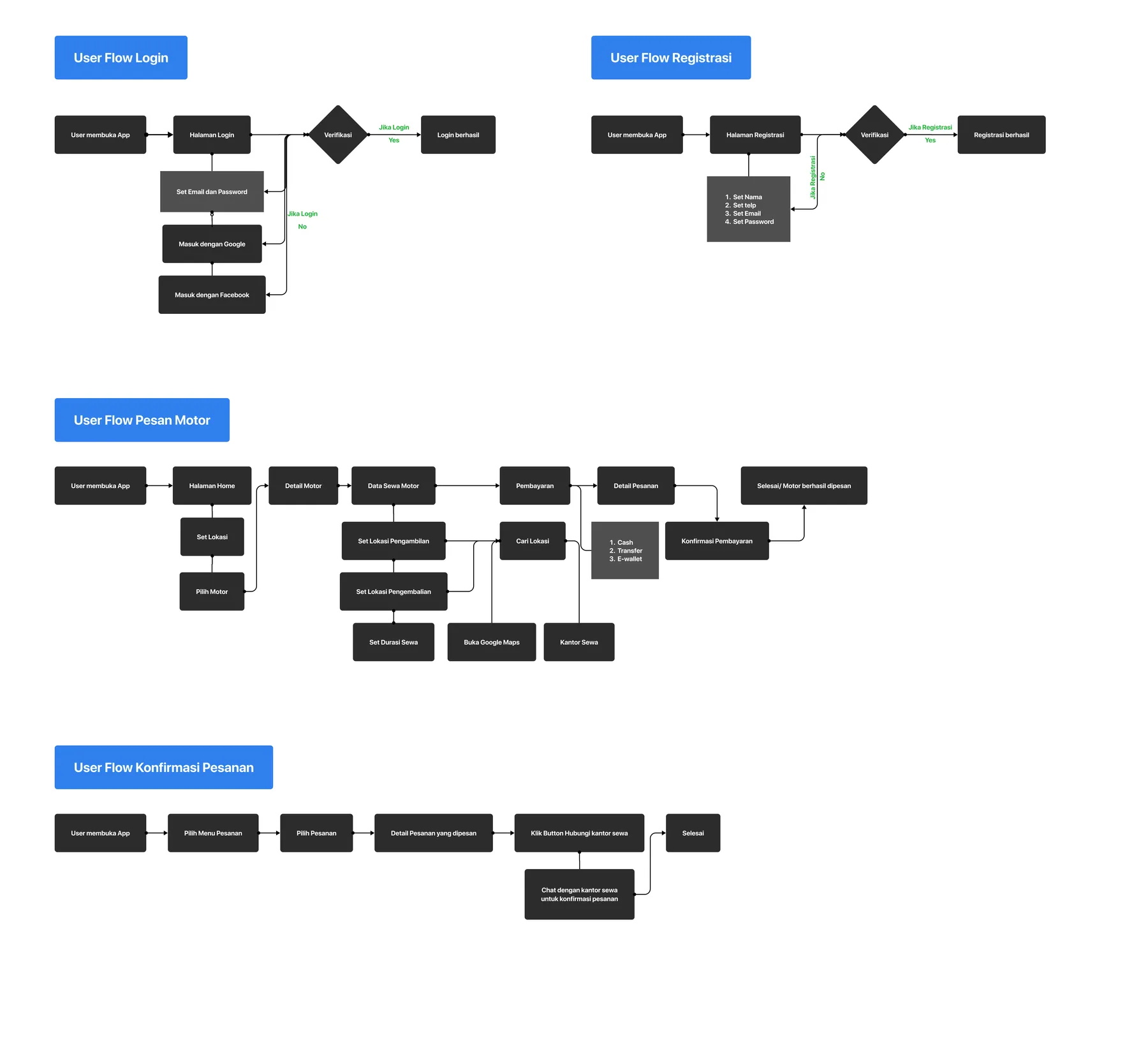
To help users get through the app, I designed the clearest possible user flow. To make development easier later on, I documented several flows as activity diagrams.
Wireframe
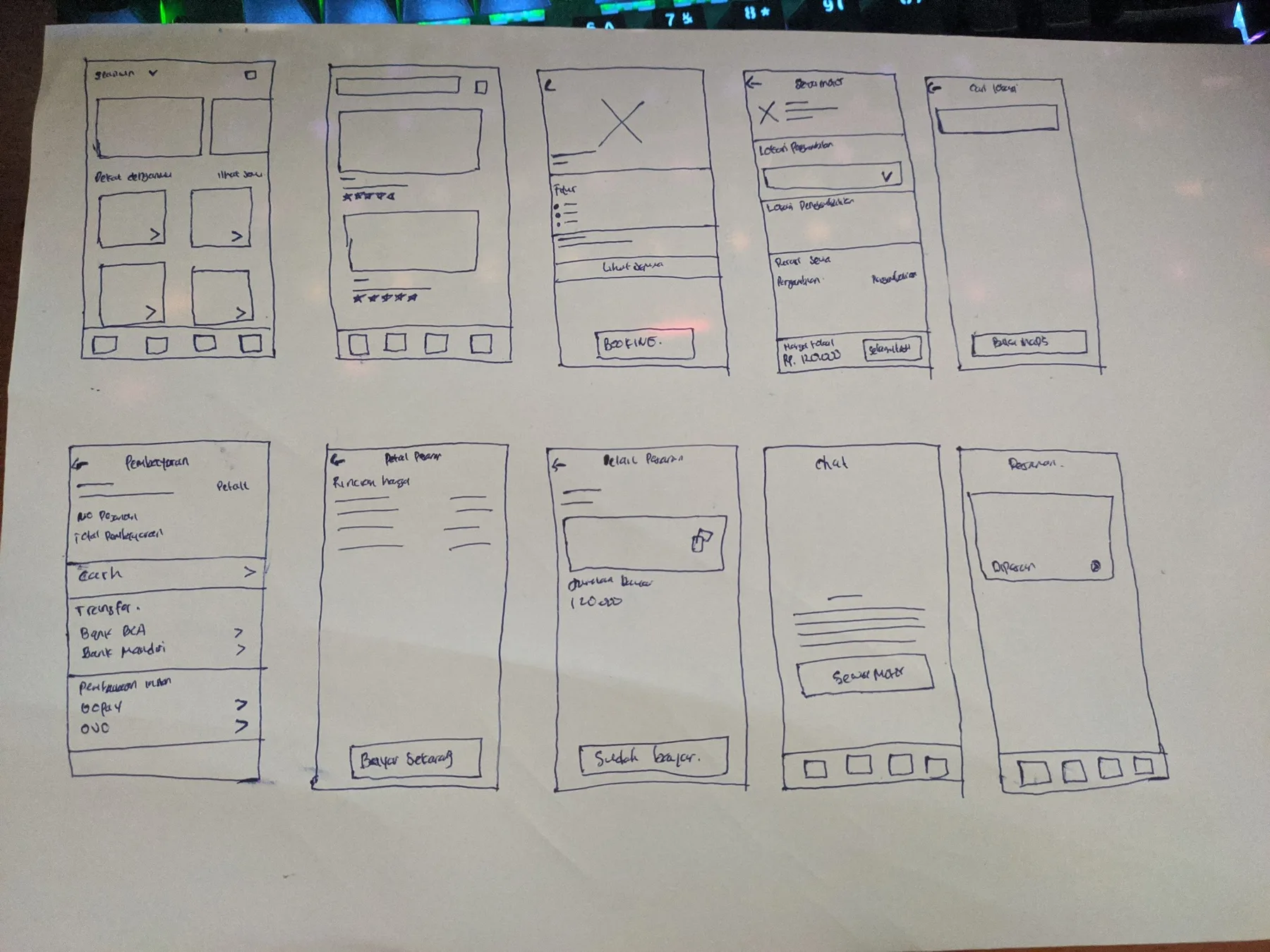
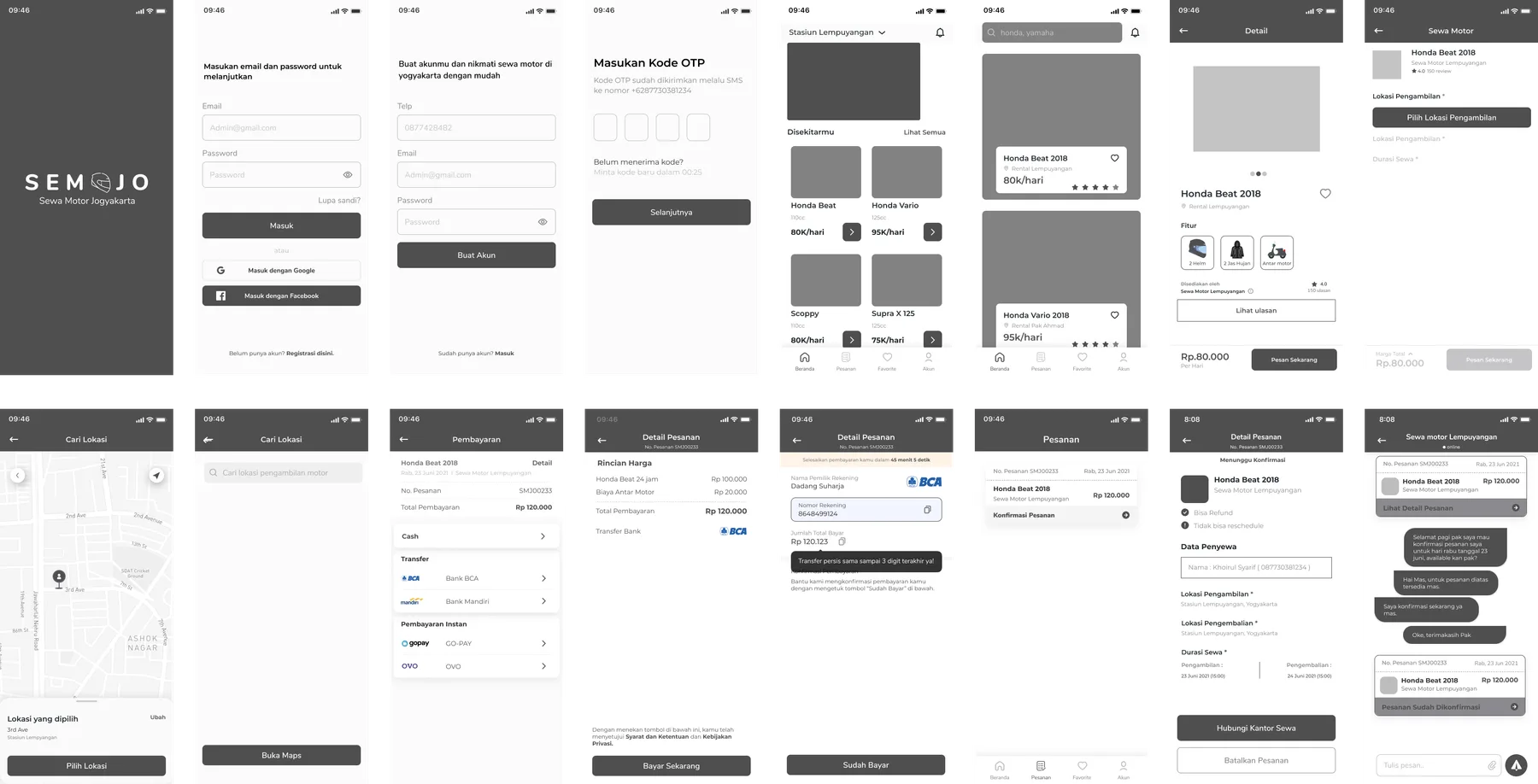
After defining the user flow, I built low-fidelity wireframes directly in Figma, which sped up the move to high-fidelity designs later.
The Design
Login & registration
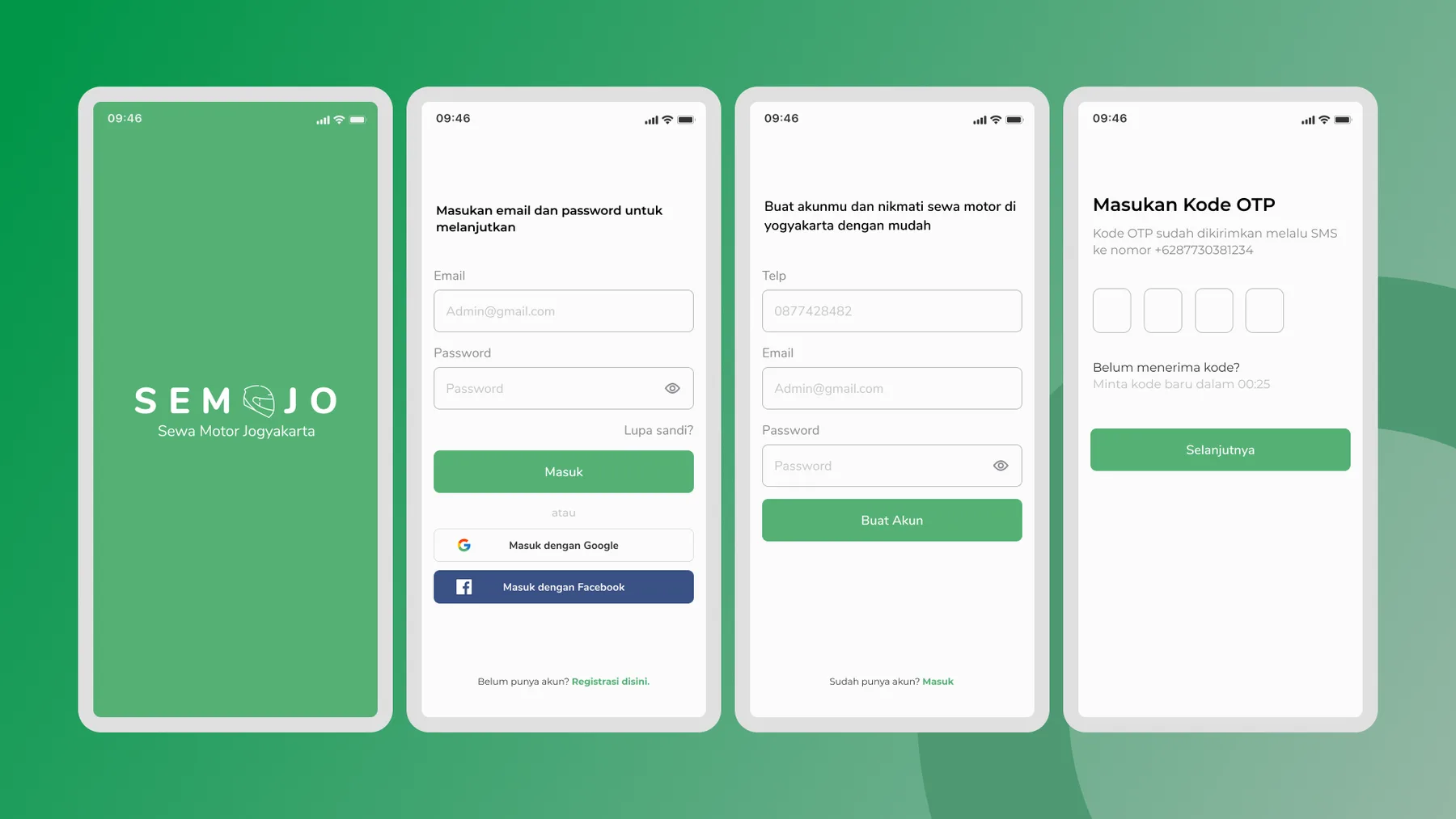
Users register with their mobile number, which is also used for verification: a one-time code (OTP) keeps sign-in secure.
Main services in the navigation bar
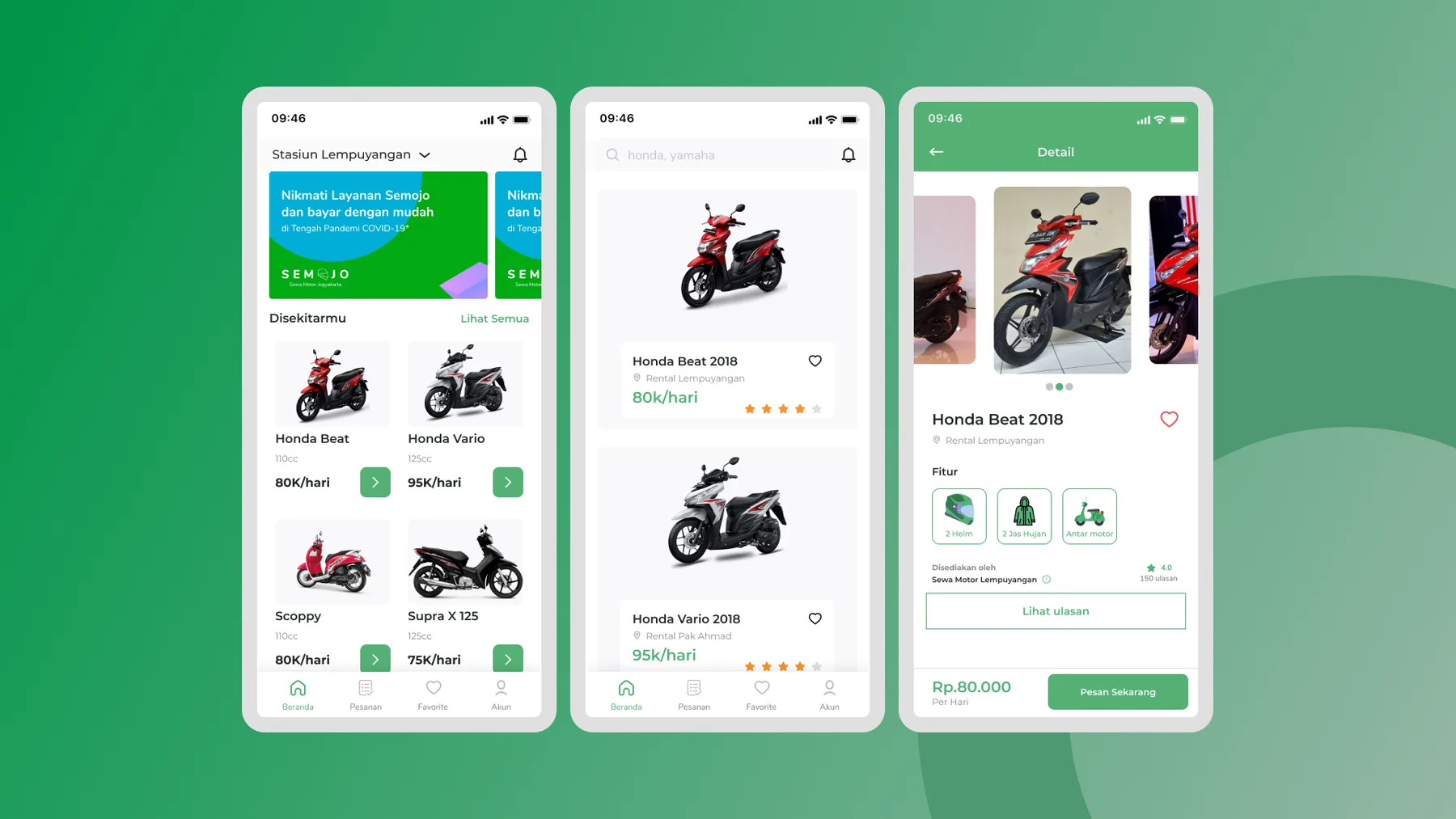
Semojo has four main sections: Home, Orders, Chat and Account. The home page immediately suggests motorbike rentals near the area chosen on the start screen.
Location search
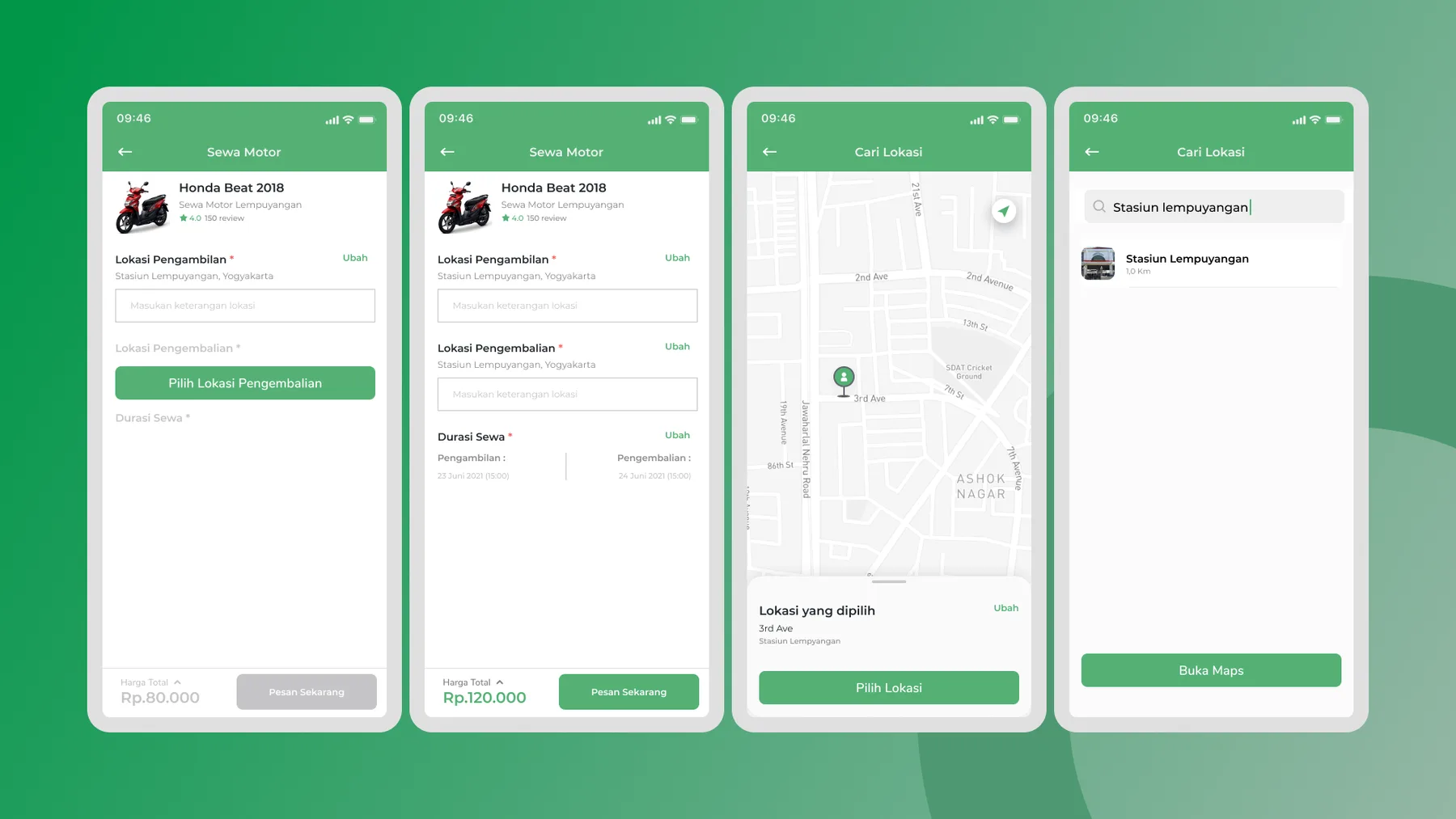
On this page, users simply search for where to pick up and return the motorbike, and choose the rental period.
Paying for the rental
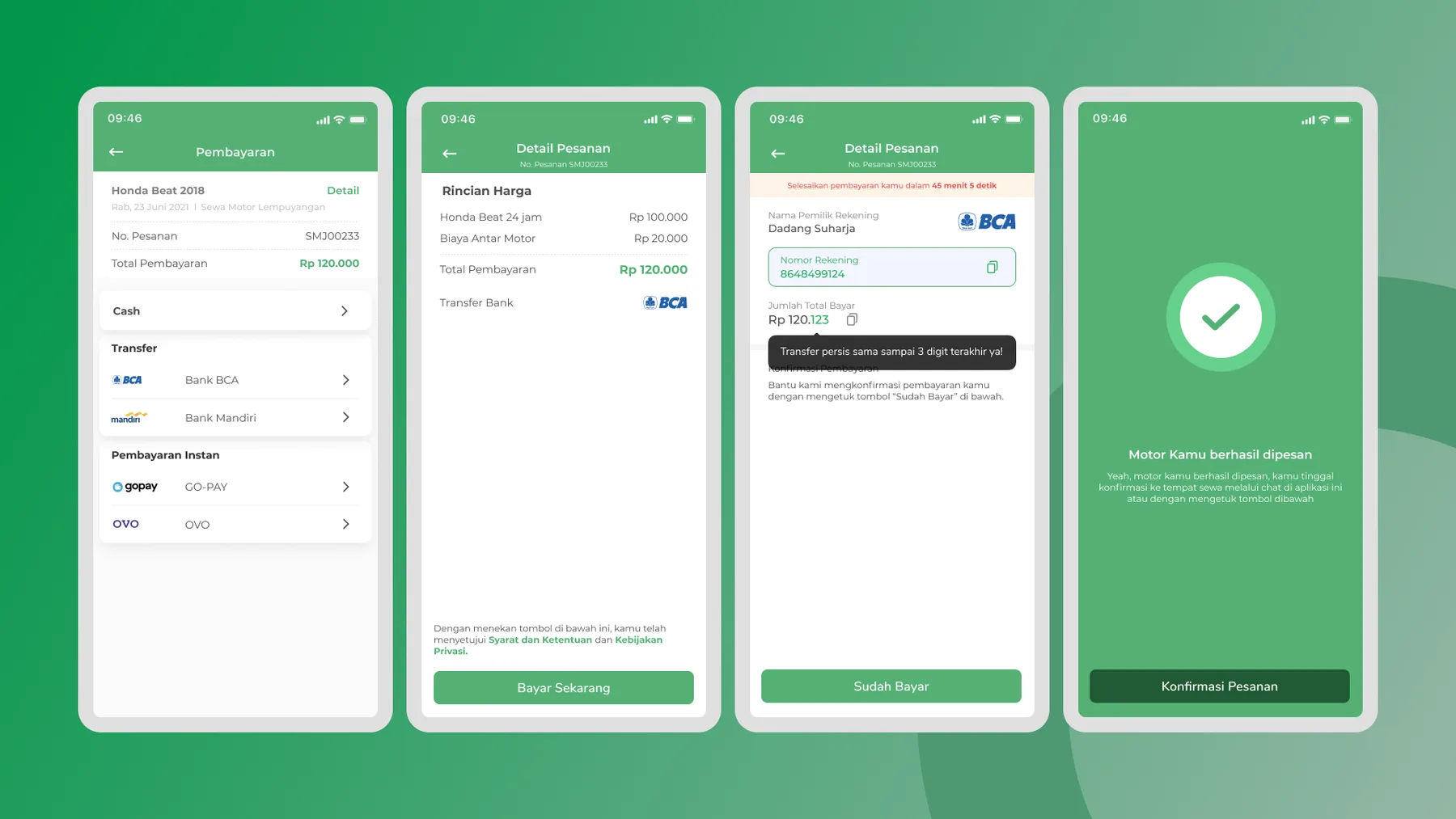
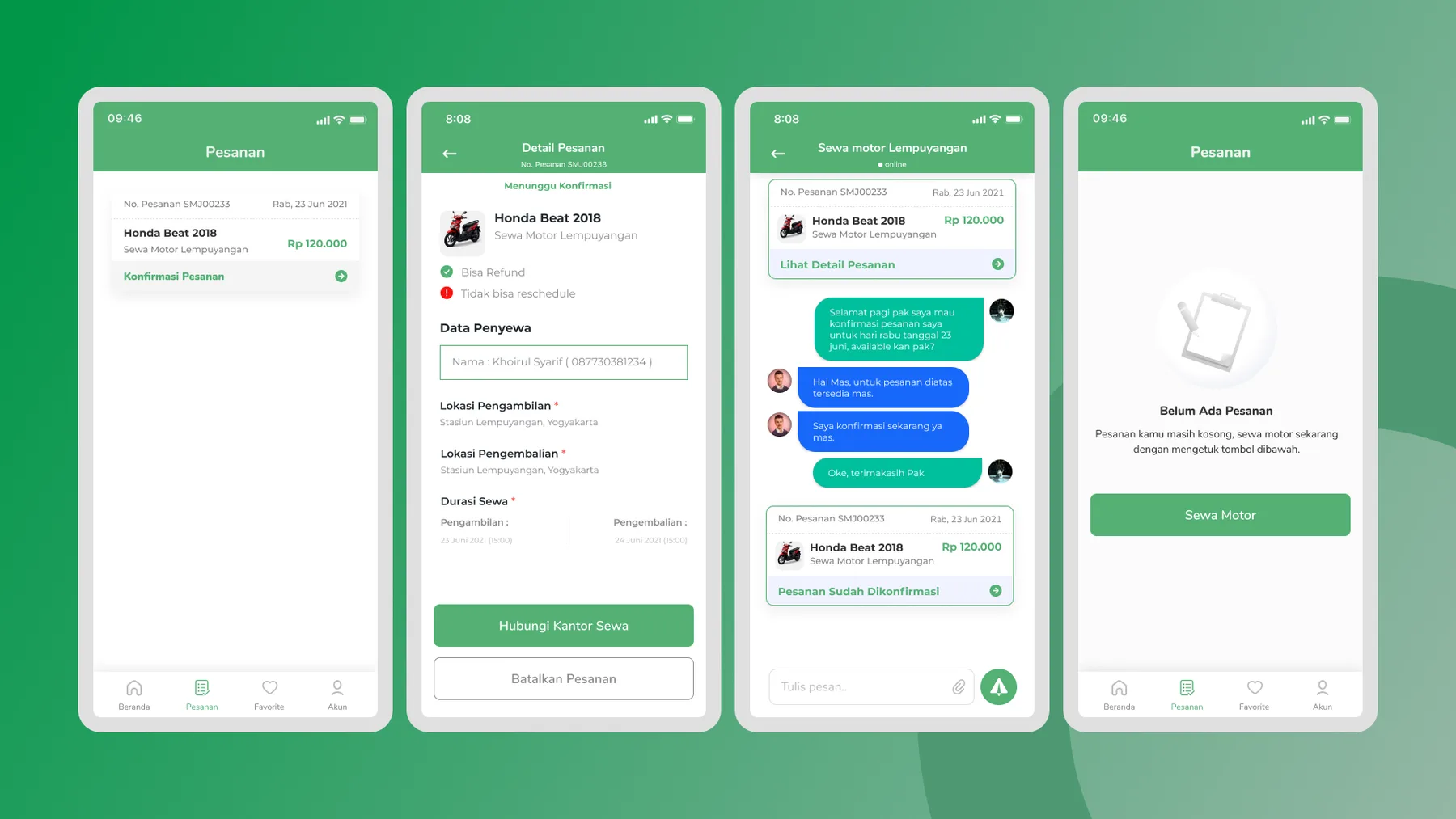
To make paying easier, the payment page offers several options, such as cash, bank transfer and e-wallet.
Prototype
What is a prototype?
A prototype is where an idea becomes a design you can try — for example, an app or website. It doesn't have to be digital; a prototype can also be physical.
I built the prototype in Figma because it's simple and doesn't need any other software. You can try it through the link below.
Open the prototype in Figmafigma.com · interactive prototype↗Test
Usability testing (UT)
“Usability testing evaluates a product's solution by testing it with representative users, so the problems can be solved successfully.”
— Dibimbing class —
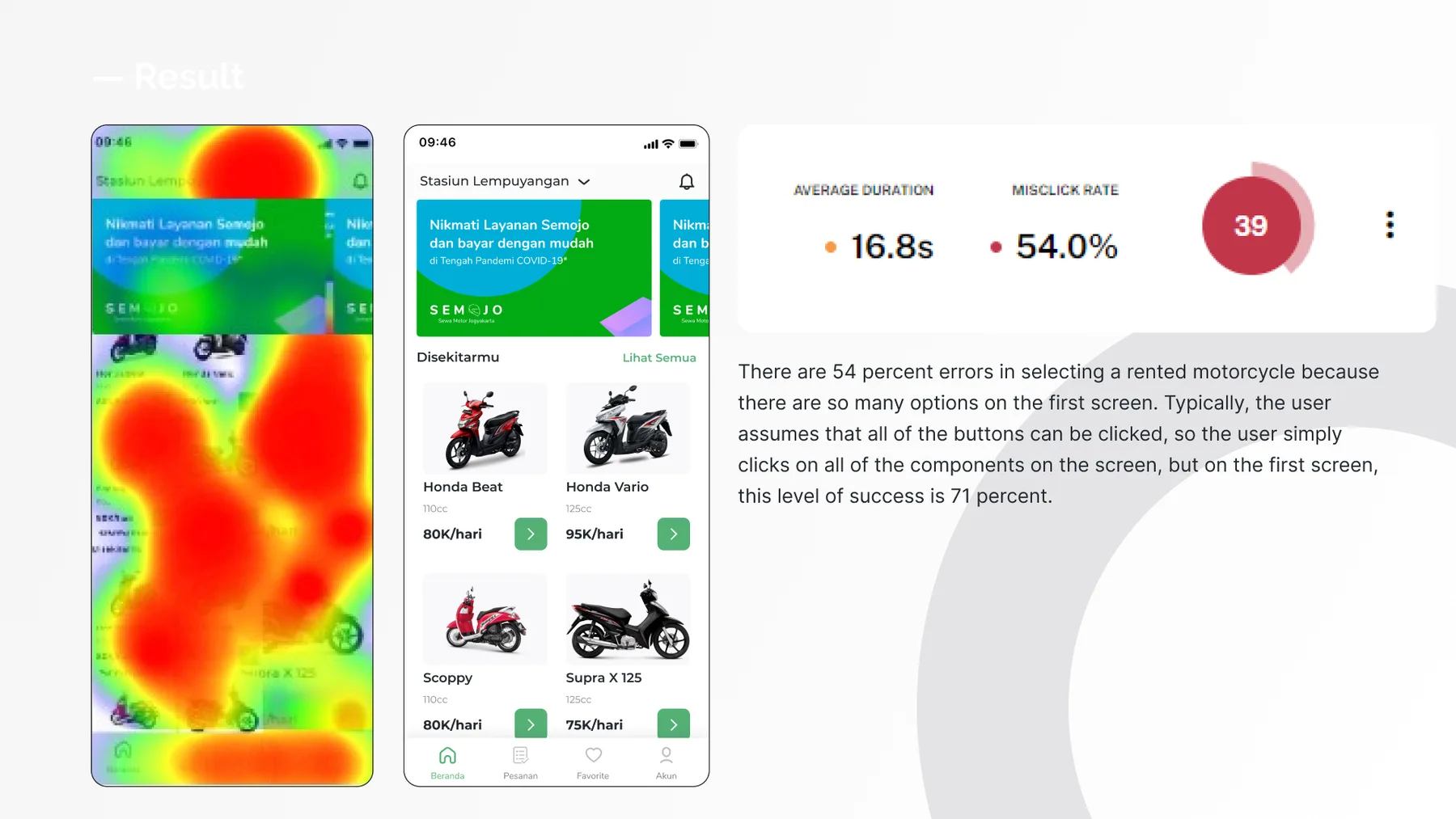
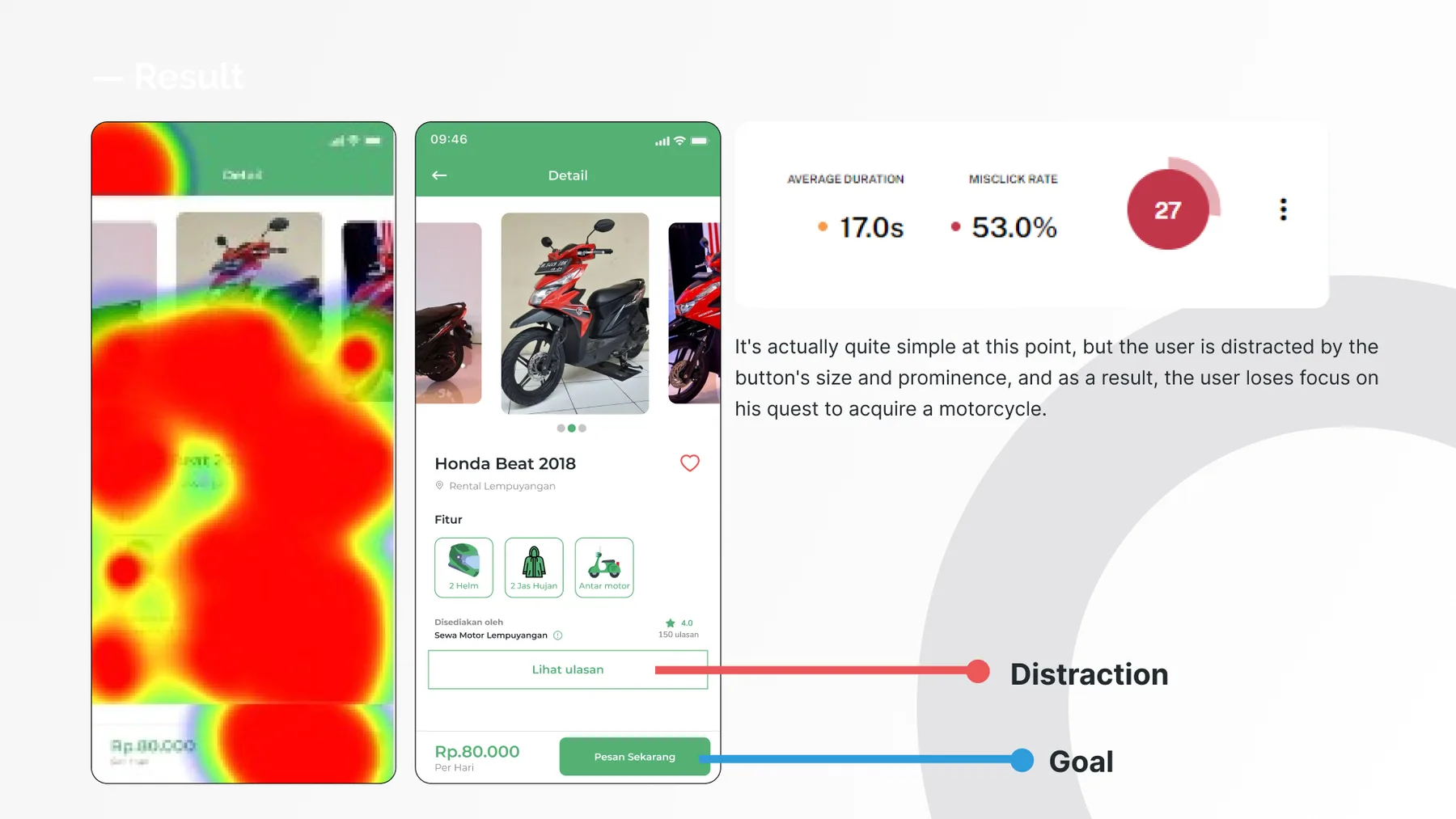
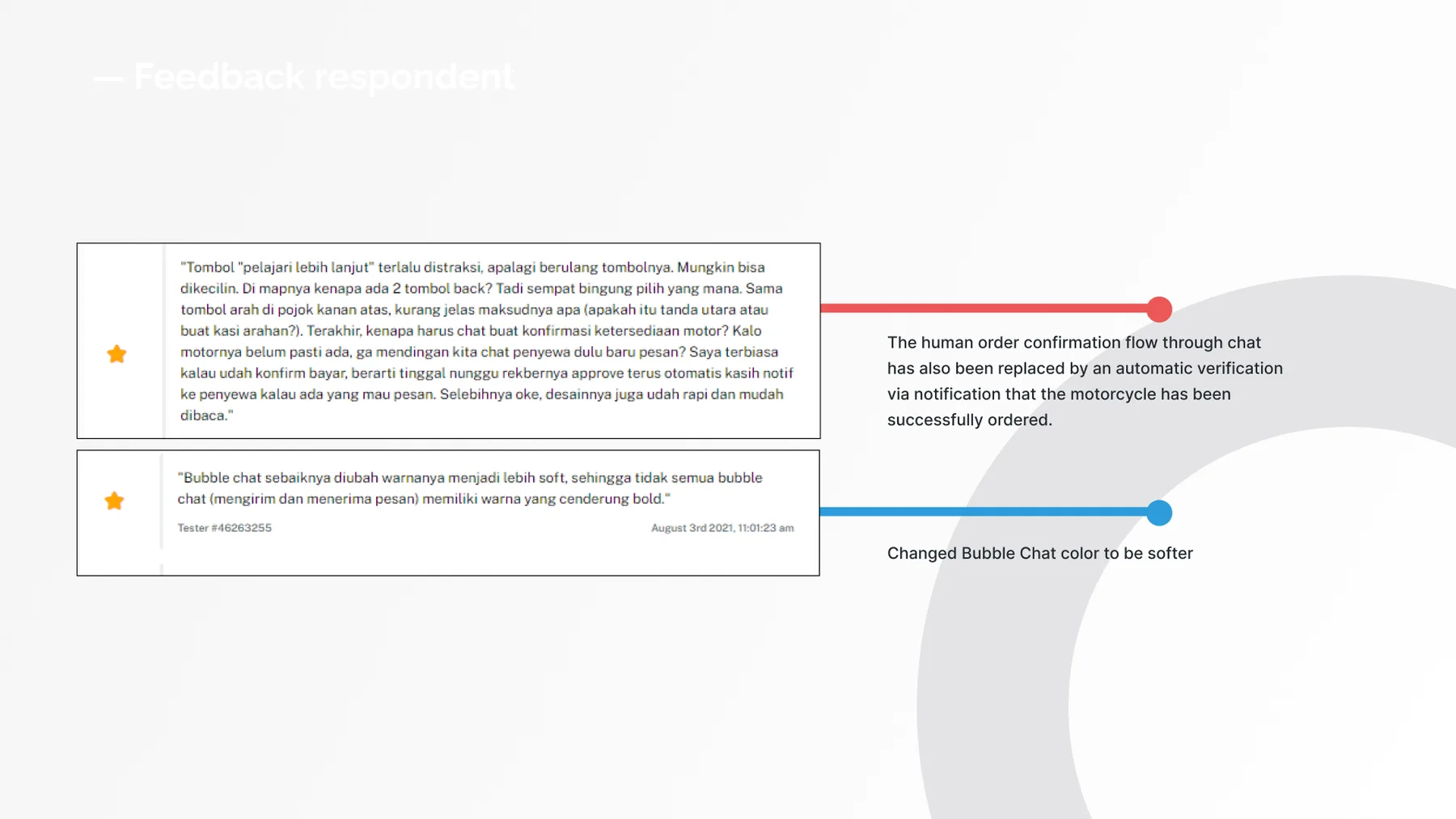
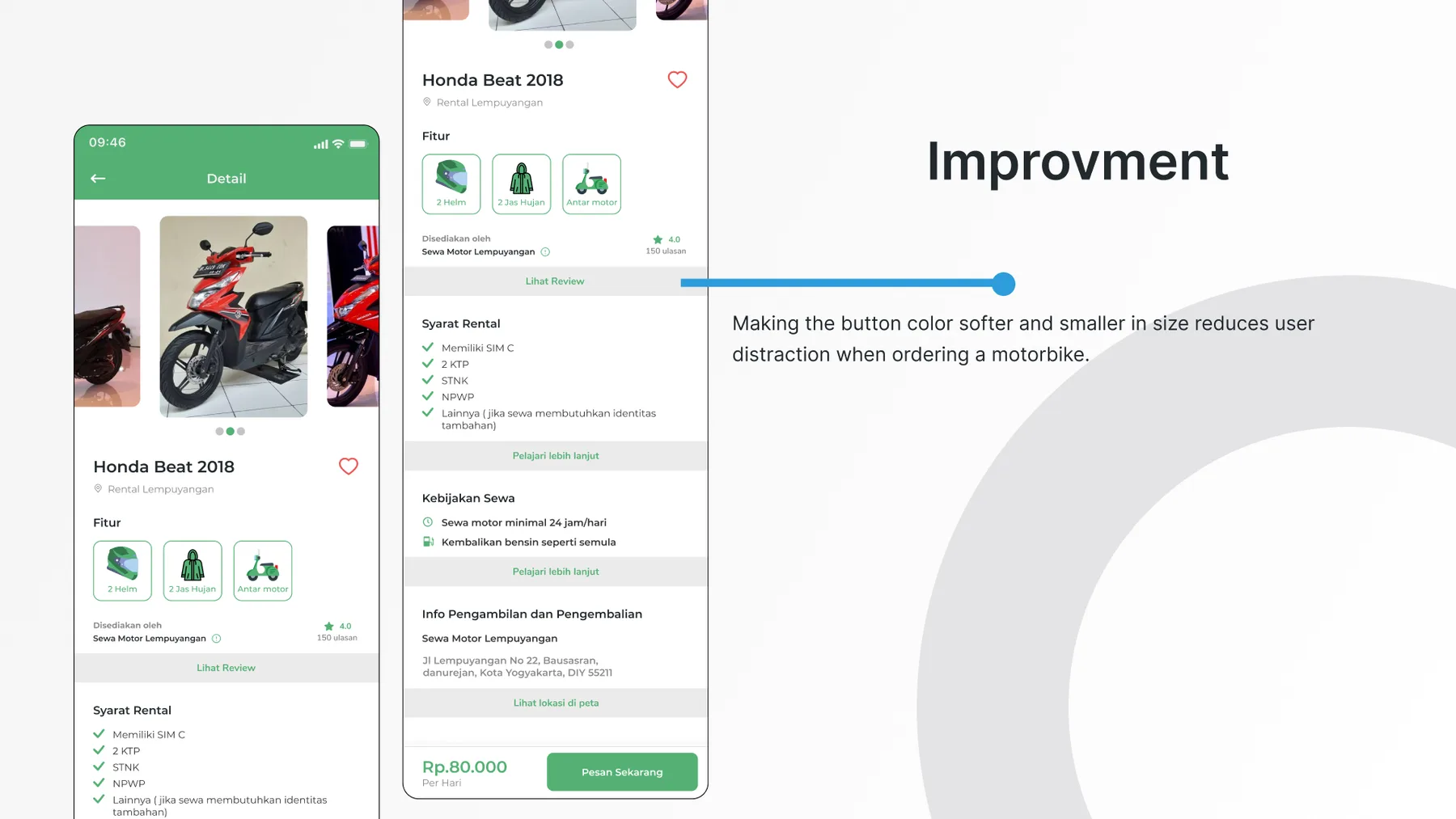
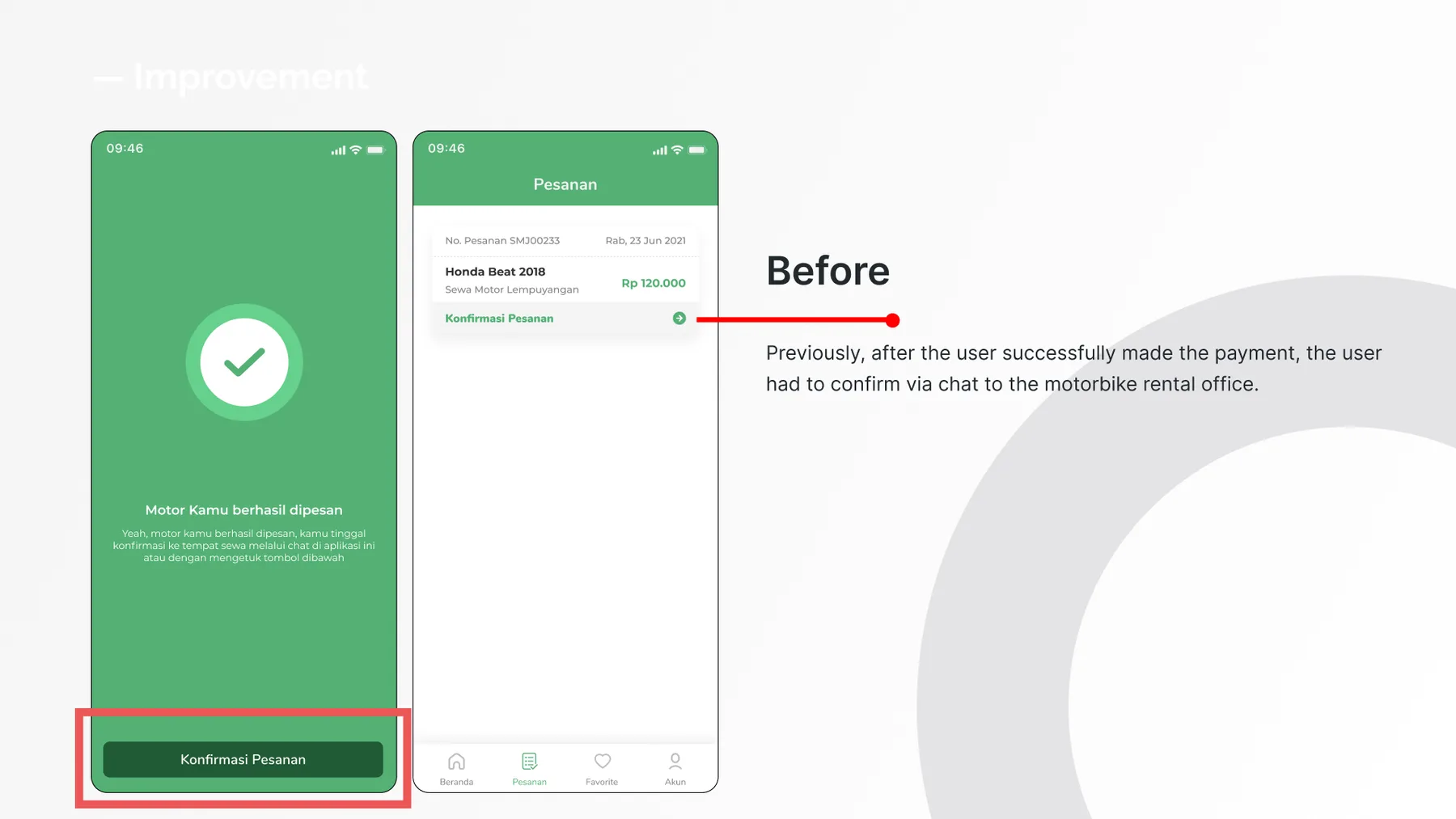
I tested the design with 5 participants using Maze. Five is the number Nielsen Norman Group recommends for this kind of test.
Why You Only Need to Test with 5 Usersnngroup.com↗
Thanks for reading — I hope the process above is useful to anyone working on a similar problem.
KhoirulAuthor
Thanks for reading — happy to walk you through the decisions on a call.